
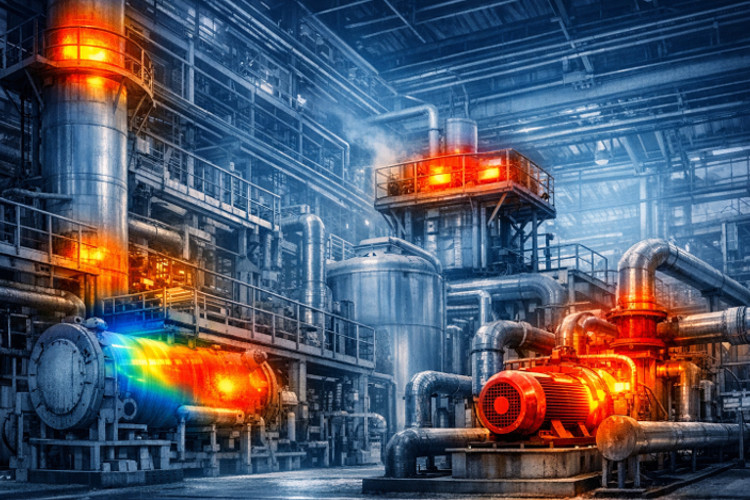
Invisible thermal engineering: how “silent” cooling failures compromise the service life of industrial plants
A large share of industrial thermal problems does not arise from abrupt failures or evident breakdowns, but from silent thermal deviations that are difficult to detect and accumulate over time. These phenomena, often overlooked, directly affect equipment service life, process stability, and the energy consumption of industrial plants.
Small temperature variations outside the ideal range can cause structural expansion, material degradation, loss of heat exchanger efficiency, and increased mechanical vibrations. The issue is that, because they do not cause immediate shutdowns, these thermal failures often go unnoticed until the damage becomes significant.
It is in this context that applied thermal engineering gains strategic relevance. Properly sized cooling systems—such as cooling towers, evaporative condensers, and customized solutions—do not serve only to “lower the temperature,” but to maintain continuous thermal stability throughout the process, which is essential for modern industrial production lines.
Integrated thermal analysis makes it possible to anticipate failures, optimize loads, and reduce the premature wear of critical components. Companies that adopt this preventive approach are able to reduce hidden maintenance costs and significantly increase operational reliability.
Alpina operates precisely at this less visible point of industrial engineering: delivering thermal solutions that operate quietly, yet decisively, ensuring that complex processes function within ideal conditions throughout the entire production cycle.